The Persecuted Bride

        (A tribute)

Walking day and night

Hidden from human eyes

Eyes of hate and despair

Against God, against her faith

She lives holding unto

The strength of Him whose

Strength is all sufficient to

Carry on her journey heaven bound


History untold holds

The windows closed

For the world not to see

Her suffering beyond human mind

Buried and burned alive

Forsaken and raped 

For the cause

Many dare not to die!


The Middle Man

And Israel said to Moses, you speak to us and we will listen, but let not God speak to us, lest we die… And the people stood afar off, but Moses drew near to the thick darkness where God was (Exodus 20:18-24).

When Adam and Eve sinned, they hid themselves from the presence of God, at the sound of His voice while walking through the garden (Gen.3:8).  A routine of the day when God would come to commune with them in the cool of the day, became a fearful experience. Peace was replaced by fear and guilt, when they made the decision to believe the serpent, instead. Sin had taken them away from the presence of God and robbed them of their relationship with Him. No longer could they feel comfortable in the presence of the holy God. What was so important to them, they lost in the decision they had made. Now, instead of welcoming God in their midst, they hid from Him as if to tell Him, leave us alone. When Israel experienced the holiness of God marked by thunders, smoking mountain, lightning, they feared Him and begged Moses to speak to them, instead. It had been three months since Israel had left Egypt in a supernatural and powerful way, when God expressed His love, His faithfulness through miracles and signs, when He walked ahead of them providing shelter from the sun and light for the night through a pillar of clouds and fire, when He opened the Red Sea and guided them through it in dry land and at the same time killing their enemies. But seemly, Israel lacked God’s holiness, and in their sinful condition, they acted like Adam and Eve – fearful.

One Out of Ten

(Luke 17:15-19)

As He was going into one village, He was met by ten lepers…and they raised up their voices and called, YAHSHUA, Master, take pity and have mercy on us! Vs.12-13. That was a cry that came deeply from the hearts of those ten lepers. Leprosy is an infection caused by the bacteria called, myocardium leprae. This bacterium causes damage to the nerves, respiratory tract and to the eyes. It is a slow, and progressive disease. Leprosy overshadows their victims for long period of time, depraving them from the joys and normality of life. They have no life at all; their isolated life defines them as rejected and forsaken by society and the world. Away from family, friends and society, they live in caves, while they watch their bodies deteriorate one limb at a time. Every morning they wake up to a hopeless day. These lepers were in desperate need of the Lord’s touch. A day had finally come for these ten lepers with shinning hope; hope found only in the One Who could heal them. These lepers were in desperate need of the Lord’s touch. However, their pain was not hidden from YAHSHUA, Who on His way to Jerusalem, He took the route that would lead to them, which was through the border between Samaria and Galilee.  Going to a certain village, YAHSHUA was met by these ten lepers. Not being able to approach Him, they cried loudly in desperation, YAHSHUA, Master, take pity and have mercy on us! The cry of these ten lepers echoing through the waves of time, with just a few words, was heard in heaven, as they directed it to YAHSHUA, Master. That was the most important prayer of their lives in connection with their health situation. That reminds me of another cry and this time from a blind man when he heard that YAHSHUA was nearby. Although censured and reproved, he kept on shouting out all the more, You Son of David, have pity and mercy on me! (Mark 10: 46-52) In his cry this blind man proclaimed YAHSHUA to be the Messiah when he shouted, “Son of David!” It was Amazing! This blind man was physically blind, but he could see beyond with his spiritual eyes. His faith sparkled brilliantly when He announced YAHSHUA to be “Son of David.” At that, the crowd rebuked him, but he would not stop shouting the tittle, “Son of David” have pity and mercy on me!

When YAHSHUA saw the ten lepers, He said to them, Go and show yourselves to the priests. And as they went, they were cured and made clean (Luke 17:14). At YAHSHUA’S command, Go, they went. That was the step they had to take to receive their healing. No hesitation, no doubt and then they were clean!  Something was missing in their lives however, when they did not return to thank YAHSHUA, except one, who upon seeing that he was cured, turned back, recognizing and thanking and praising God with a loud  voice; and falling prostrate at YAHSHUA’S feet, thanked Him and he was a Samaritan (Luke 17:15-16). Interesting observation YAHSHUA made, when He asked the question, Were not ten cleansed? Where are the nine? Was there no one found to return and to recognize and give thanks and praise God except this alien? That was a rebuke to the Jewish nation, represented by those nine lepers. Out of ten, only a Samaritan turned around to acknowledge his healing; praise and thank the Lord.
The Union

(Ruth)

In the days when the judges ruled, there was a famine in the land. And a certain man of Bethlehem of Judah went to sojourn in the country of Moab, he, his wife, and his two sons. But Elimelech, Naomi’s husband, died, and so did her two sons.

In this apparent voided of happiness story there is a prophetic and beautiful end. We see in this story not only the picture of God’s love embedded in His plan for the Gentile nations, but also Ruth as a type of the gentile bride of Christ.  Call me not Naomi, she said, call me Mara [bitter]. While Naomi was drained in her unhappiness, God had a beautiful future for her life; one that would make her forget all her past losses. It all started when her family moved from Bethlehem duo to a famine. There, she lost her husband and her two sons. After she had lived in Moab ten years, she decided to go back home. Apparently, she had had enough However, both her daughters-in-law showed the desire to follow her to Bethlehem, but when she persistently refused the idea, one of them left her and went back home. Ruth however, firmly said, “urge me not to leave you or to turn back from following you; for where you go, and where you lodge will lodge. Your people shall be my people and your God my God,” Naomi finally agreed to let Ruth go with her. In her words “Your people shall be my people,” Ruth showed great faith. There was more to her words than she realized. There was a prophetic meaning by being part of the nation of Israel she could never fathom. That would be a beautiful plan God had for her life. So, what compelled a young woman to give up her family, culture, and religion to follow her Mother-in-law, whose culture and religion were different from hers?  Perhaps Naomi, as her mother-in-law had a good influenced in her life, and as a result, a good relationship between them to compel Ruth to leave all behind to follow Naomi. But beyond the tangible, God was working His plan through Ruth’s life, to bring His Son into the world many years to come.

Expression

Love, I saw your appearance

You were so disfigured

In an expression so deep

Beyond comprehension

Of a human mind


Love, you touched me

Penetrating my inmost being

I noticed your suffering

And not knowing what to say

I cried my God!


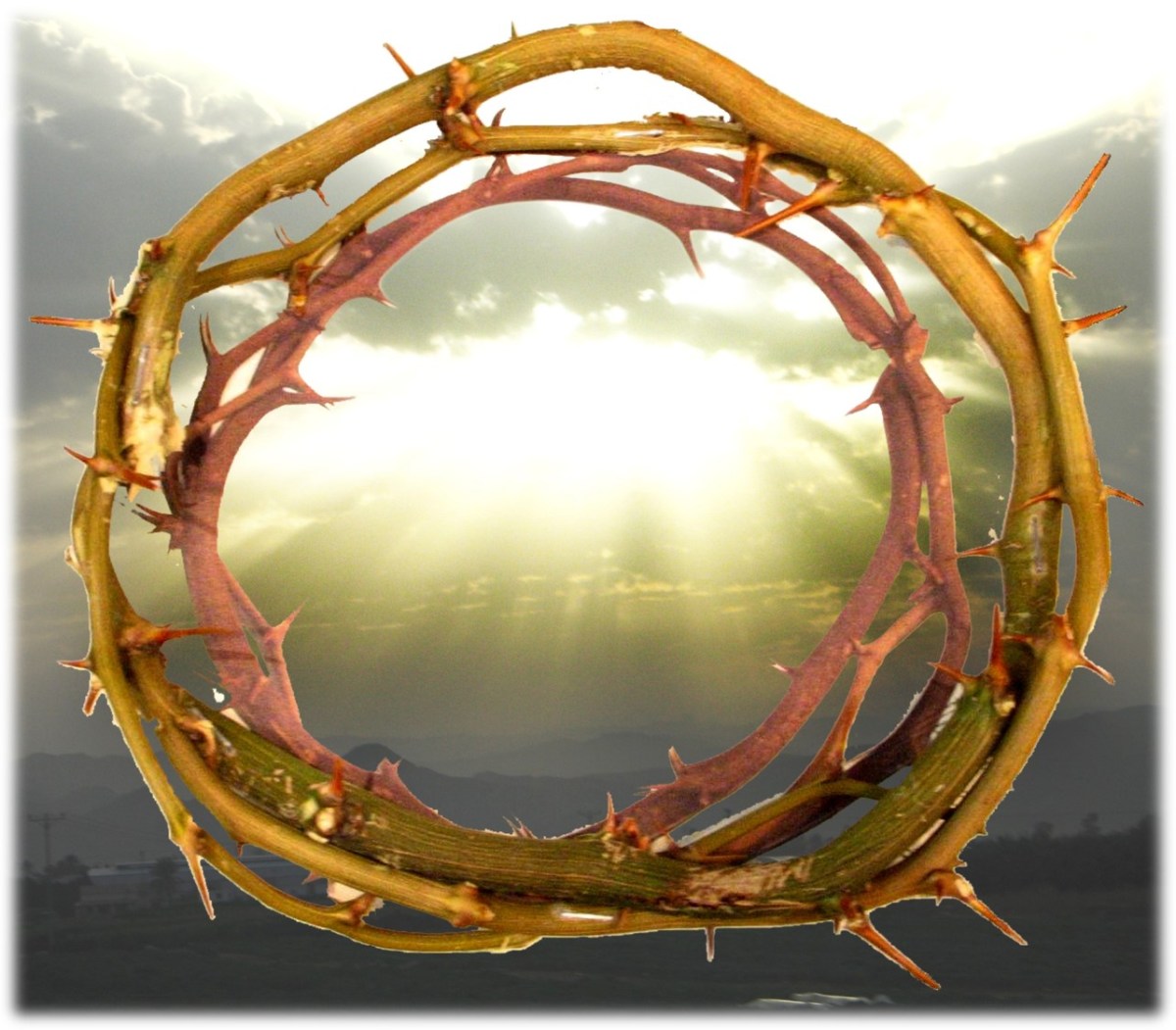
The crown of thorns piercing

Through your head

Causing your blood to flow

Your eyes speaking to me

In an expression so deep


Embracing me, I heard you

Say, Father forgive her

In an expression so deep

I bowed down, touching your feet

Wanting to understand such love


The Man from Gennesaret

His name, I don’t know

But this thing I know

That for a long time

He was in bondage

To demons, I mean

Naked and destitute

From society and family

He lived in tombs


Fear ran over the town

His life a scary thought

To those all around

Until one day Someone

Greater than the demons

Within him came and

Touched his life

With love and freed him


The Last Trump

(I Corinthians 15: 52; I Thessalonians 4:16)

The trumpet is an instrument of great significance in the Bible. It served Israel when in their pilgrimage through the desert: to call to assemble, to move on, to announce the new year, to call to war, and to proclaim victory, and more. Of all the instruments, God chose the trumpet to establish order, warnings in many aspects in the lives of the Jewish people. God also established the Feast of Trumpets for the nation to carry on the tradition He established for them. We read it in Leviticus 23:24: Say to Israelites, On the first day of the seventh month (almost October), you shall observe a day of solemn rest, a memorial day announced by the blowing of trumpets, a holy assembly. When God descended to Mount Sinai to covenant with Israel, at the beginning of their journey, He expressed Himself to them through a loud trumpet sound. That was not a sound the people enjoyed, but a sound that caused them fear to the point of asking Moses to speak to them instead of God. That was a sound that echoed God’s holiness, purity and judgment, as Mount Sinai was wrapped in smoke, for the Lord descended upon it in fire; its smoke ascended like that of a furnace, and the whole mountain quaked greatly. (Exo. 19:18-19). That was also the symbolic sound of the tribulation’s trumpets bringing judgements upon the earth for its wickedness.

At Mount Sinai, a trumpet sound sealed the covenant between God and Israel, and God’s trumpet future sounding will finalize His promise of redemption for His church. We also see in this chapter of Exodus the picture of the bride of Christ being taken away in verses 13 and 19 which reads, When  the trumpet sounds a long blast, they shall come up to the mountain; as the trumpet blast grew louder and louder, Moses spoke and God answered him with a voice; the Lord came down upon Mount Sinai to the top of the mountain, and the Lord called Moses to the top of the mountain and Moses went up. Let’s compare this passage with the one in I Thessalonians 4:16: For the Lord Himself will descend from heaven with a loud summons, with the shout of an archangel and with the blast of the trumpet of God. And those who have departed this life in Christ will rise first; then we, the living ones who remain, shall simultaneously be caught up along in the clouds to meet the Lord in the air; and so always we shall be with the Lord! A cry of summons, a shout and a trumpet and this time, the trumpet of God, will resonate for the rapture of the church of Christ, the one whose Chief Cornerstone is YAHSHUA her Lord.  The trumpet of God is a specific trumpet to be used to call His bride home, as opposed to the seventh trumpet of Revelation which will be used to bring judgment upon the earth. This is the reason why the need for the bride of Christ to be removed from earth.  The rapture is the means by which God will use to save the Bride of Christ before His wrath is poured on earth, just as He did for the righteous Noah before the flood and Lot before the destruction of Sodom and Gomorrah. There would not have been a reason for the rapture of His bride, if there would not be a world-wide tribulation, or God’s wrath to punish the wicked people of this earth.

What Will You Do When the End Comes?

(Jeremiah 5:31; Luke 21: 33-36)

The Prophet Jeremiah continually warned Judah of coming judgment and destruction with a calling for repentance. But Judah had nothing to do with Jeremiah’s warning; they remained in their heart of stubbornness. Their prophets prophesied falsely; their priests exercised their own rule and Israel loved to have it that way. The Prophet Jeremiah wept bitterly over Judah’s sins and judgement that was coming upon the nation. He said, But if you will not hear and obey, I will weep in secret for your pride; my eyes will weep bitterly and run down with tears, because the Lord’s flock has been taken captive (Jer. 13:17). When Judah remained stubborn in their ways, Jeremiah asked the question: What will you do when the end comes? When destruction comes to whom will you turn to? What are your plans to escape your destruction? In the days of Noah, people heard the message of coming flood for several years, but they did not repent of their ways and were destroyed. Judgement came; they could not do anything to escape it. God gives men always a frame of time for them to change their ways in repentance and brokenness of heart before He sends judgment on them. In the past He has sent Patriarchs, Prophets and judges. Today We have His Word warning us of coming judgments and how to escape it.

Before the Apostle Paul was martyred, he gave Timothy a grim picture of the last days. He said that people will not tolerate sound doctrine but wanting to have their ears tickled they will accumulate for themselves teachers in accordance to their own desires, and will turn away their ears from the truth, and will turn aside to myths. Does it not sound like today? Mega churches are full of people wanting to be entertained with words that bring good feelings. They emphasize good energy and positivism and prosperity. There are no teachings on conviction of sin and repentance “You are okay; I am okay.” That’s the theory that keeps them deceived and far from the truth. The word of God says that we have sinned and have come short of the glory of God; it says that our hearts are wicked above all things, but He invites us to repentance for forgiveness of our sins. Meanwhile the world turns its axes to destruction because of the men’s wickedness; they deafen their ears to sound doctrine, following a deluge of lies. Just like in the days of Jeremiah as a prophet, when he warned Judah of coming judgement. Instead of repenting and returning to God they ridiculed him and put him in prison. As a result, Judah was conquered and the temple destroyed. Many lives were lost many were taken to Babylon to captivity. It seems to me that we live in the days of Jeremiah when the abundance of false prophets is clouding the air with false teachings. They teach prosperity instead of repentance; they make their millions and continue to empty peoples’ pockets with their devious way of begging for more money. They live in mansions, they have private airplanes and disregard the financial, physical and spiritual needs of God’s people. They have blinded the eyes of those who are spiritually ignorant, leading them to worse deception. They falsely prophecy coming blessings instead of judgement. “What will they do when the end comes?”

The Story of Two Sisters

(Luke 10: 38-42; John 12)

Now while they were on their way, it occurred that YAHSHUA entered a certain village, and a woman named Martha received and welcomed Him into her house. And she had a sister named Mary, who seated herself at the Lord’s feet and was listening to His teaching (vs.38-39). Bethany was the village where Martha, her sister and her brother lived. It was located on the eastern slope of the Mount of Olives, about two miles from Jerusalem according to John 11:18.  Today Bethany’s name is el- Azariyeh, meaning the place of Lazarus and it is a ruinous village; a village separated by wall where tourists no longer have access to it. But it remains with a beautiful and silent past, for our Savior often visited it and had supper with His friends, Martha, Mary and Lazarus. Lazarus was brought to life there and many came to believe in YAHSHUA. Bethany will always shine its past!

After the death and resurrection of Lazarus, YAHSHUA was invited to supper with them. While Martha served, Mary anointed Him with a pound of ointment of pure liquid nard [a rare perfume] six days before His death. Spikenard or nard, according to Wikipedia, is “a class of aromatic amber-colored oil. It was offered on the specialized incense altar in the time when the tabernacle was located in the first and second temples.”  This perfume-oil was very significant in the action of Mary when she anointed the Savior six days before His death. It speaks volume concerning Him as the Lamb of God being prepared for the Passover sacrifice. Mary had no idea of the prophetic meaning her action had. She was only expressing her gratitude to Him, but at the same time, she was being part of the fulfilling of God’s plan for His Son. The Lord defended her action against those who criticized her and confirmed the purpose for her action by saying, Let her alone. It was [intended] that she keep it for the time of My preparation for burial (John 12:a). The Lord blessed Mary in return. Her action did not go unnoticed. He rewarded her by saying, Surely I tell you, wherever the good news is proclaimed in the entire world, what she has done will be told in memory of her (Mark 14: 9).