The Gentile Bride

(Ruth 1-4)

The story of Ruth, the Moabite, does not stop with the end of the book of Ruth; instead, it begins. It is an amazing story to read. In fact, it is the kind of story everyone would like to read for its wonderful ending.  In the days when the Judges ruled, as the Bible tells us, a family of four from the town of Bethlehem of Judah, left their country to sojourn in the country of Moab, due to a famine in the land. They were Elimelech, Naomi and their two sons, Mahlon and Chilion. It was a trip of about twenty to thirty miles, not far at all. Moab, is located east of the Jordan River and the Dead Sea, South of the Arnon (Num. 21:10-15).  The Moabites descendants have a questionable history due to Lot’s daughters in their incestuous relationship with him (Gen. 19:31-35). After the judgment that came to Sodom and Gomorrah, Lot’s daughters assuming they to be the only females in that region where they settled, they took upon themselves the responsibility to solve the problem by bearing Lot’s children to enable the line of their family to continue. In a devious and perverse way, they caused their father to lie with them and they both bore his children. Not an attractive story, is it? But God, as it is said, “Writes straight on a crooked line.”  As a matter of fact, we are all crooked before Him, but His love has covered the multitude of our sins through His Son, YAHSHUA.
The Holiness of God Is Like a Mirror

(Isaiah 6; Job 42:1-6)

The Prophet Isaiah saw the holiness of God in a supernatural manner that only God Himself could appear to him. He said, I saw the Lord sitting upon a throne, high and lifted up, and the skirts of His train filled the temple. Above Him stood the seraphim, each had six wings: with two covered his face, and with two covered his feet, and with two flew. And one cried to another and said, Holy, holy, holy is the Lord of hosts; the whole earth is full of His glory! And the foundations of the thresholds shook at the voice of him who cried, and the house was filled with smoke (Isaiah 6: 1-4). With that, the Prophet Isaiah experienced the full expression of heavenly worship, pure and truthful done by sinless and holy angels. That was a heavenly moment offered to Him, when God Himself opened heaven while worship service was taking place. It was an awesome and indescribable experience. Before the holiness of God, all Isaiah could say was, Woe is me! For I am undone, and ruined, because I am a man of unclean lips, and I dwell in the midst of a people of unclean lips; for my eyes have seen the King, the Lord of hosts! (Isaiah 6: 5) In chapter 3: 8 the Prophet Isaiah describes the spiritual condition of the nation of Israel mainly Judah at that time: For Jerusalem is ruined and Judah is fallen, because their speech and their deeds are against the Lord, to provoke the eyes of His glory and defy His glorious presence.

But Peter Got Up

(Luke 24: 9-12)

YAHSHUA’S last Passover was the most memorable Passover ever observed in the frame of time. Although not recognized and acknowledged by men, it was the most important Passover in God’s purpose of redemption of mankind. That Passover came bringing the sacrifice of the perfect Lamb of God. No other animals that were being slaughtered that day as a sacrifice for the atonement of sin mattered at that time, for God had brought out His only Son to the altar to sacrifice Him and through His death, purchase men for Himself. The shedding of His blood through the nails piercing through His hands and feet, the spear piercing through His side, and the thorns in a shape of a crown piercing His head, were the manner in which He paid the price to redeem men to His Father. YAHSHUA warned His disciples several times about His ultimate sacrifice; however they were deaf to the fact- deaf to the point of betraying and denying Him. Why would they believe His resurrection, when they did not believe His death could happen? Peter tried to stop him from going to the cross more than one time; however, when the time arrived, he denied to have known Him. YAHSHUA called them the incredulous generation; the word incredulous means unwilling, or unable to believe; doubt and skepticism according to Webster’s dictionary. That was the position of the disciples all along even when YAHSHUA warned them of His death and His resurrection.

Children of Abraham

(Galatians 3)

Thus Abraham believed, and it was reckoned and placed to his account and credited as righteousness (3:7). Faith is the thing that connects us believers to the Patriarch Abraham. When learning about his life’s background, we see that faith guided him to obedience to the call to leave his country.  Although he had come from a family who worshiped false gods, God called Abraham out of that to a place he hadn’t known before for a purpose to form a nation out of his descendants. He gathered his things, wife and nephew and took off to a place God chose for him. The Lord said to Abram, Go for yourself away from your country, for your relatives and your father’s house, to the land that I will show you. And I will make of you a great nation, and I will bless you and make your name famous and distinguished, and you will be a blessing… Abram took Sarai his wife, and Lot his brother’s son, and all their possessions that they had acquired in Haran, and they went froth to go to land of Canaan (Gen. 12:1-2,5).

Why was the Holy Spirit sent to the Upper Room and not to the Temple

Before our Lord YAHSHUA went back to heaven He promised the disciples His presence to be with them always. So deep was His love for humankind. He said, I am with you all the days to the close and consummation of the age (Matt. 28: 20b). In His priestly prayer, He prayed His desire that those whom God had entrusted Him may be with Him where He is (John 17:24a). God the Son came into this world and physically displayed God’s love for men. When He had fulfilled all that He had come to do, He then sent His Holy Spirit to abide in those who would trust and receive His gift of salvation. One can never measure God’s gift toward men. It just grows beyond men’s life on earth. Amazing gift! For the disciples to receive the promised Holy Spirit, He instructed them where they should be in order to receive Him. He said, And behold, I will send forth upon you what My Father has promised: but remain in the city [Jerusalem] until you are clothed with power from on high (Luke 24:49). The upper room was the place where His Spirit was to descend upon them. A new chapter of God’s book was opened for men to know and follow His instructions. That was a new era, a new dispensation- the new covenant- the covenant of blood which included people from the entire world. Christendom was then born. For God so loved the world that He gave His only begotten Son, so that whoever believes in Him shall not perish but have eternal life (John 3:16).

The Man Dressed in Linen

(Daniel 10)

I lifted my eyes and looked, and behold, a man clothed in linen, whose loins were girded with pure gold of Uphaz. His body also was like beryl, His face had the appearance of lightening, His  eyes were like flaming torches, His arms and feet like the gleam of polished bronze, and the sound of His words like the sound of a tumult  (vs. 5-6).

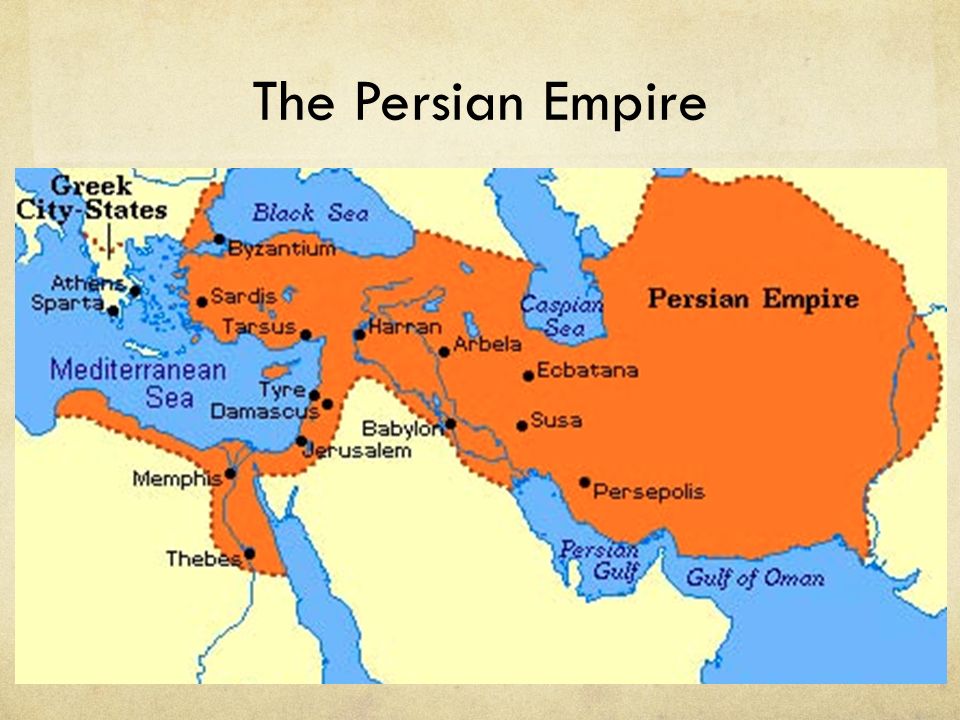
Now in the third year of Cyrus king of Persia, Daniel was visited by not just angels, but by the Lord Himself. The significance of this visitation from the Son of God before His incarnation is prophetic in meaning. Dressed in His complete outfit of a high priest, He is distinguished from all angels. He was taking His position of our high priest forever, and in time to come, He would offer Himself as the ultimate sacrifice to buy men for God and become the Author and the Source of eternal salvation to all those who give heed and obey Him (Heb. 5:9b). He came to Daniel when Daniel was in mourning for three whole weeks. Daniel ate no pleasant or desired food, nor did any meat or wine came into his mouth; and he did not anoint himself at all for the full three weeks (vs. 3). Earlier, in chapters eight and nine Daniel had visions related to the future events of the tribulation, which now caused him to mourn for three weeks, for he understood the word and had understanding of the vision (vs.1).  In chapter nine he was given the time frame of when Messiah would come, die, the destruction of Jerusalem and of the temple, and the prophecy of the antichrist in the period of seventy weeks of years given to Daniel’s people- the Jewish people.  Now in chapter ten he takes to heart the reality of the visions he saw and the words he heard, although, the angel told him, The vision of the evening and the mornings which had been told him is true. But seal up the vision, for it has to do with and belongs to the distant future. And Daniel said, I, Daniel, fainted and was sick for [several] days (8:26-27a).

They Drew Backward and Fell to the Ground

(John 18)

The hour had come for our Savior YAHSHUA to be sacrificed on that Passover Day. Nothing more important was in His mind than that of fulfilling the purpose for which He had come to earth for thirty-three years. His ministry was coming to an end. It was going to be completed at His death and resurrection during the week He was arrested, or gave Himself up. After a time spent with His disciples instructing and comforting them, He proceeded to the Gethsemane Garden, the place where He would express the beginning of the anguish He was to experience for many hours before His ultimate death. In the midst of all the preparations for the coming Passover, people were indifferent to that particular One, not knowing that the true Passover Lamb- the One carrying the true meaning of that feast, was going to once and for all close that chapter of slaughtering animals for the forgiveness of men’s sins. When the time came, He headed for Jerusalem amidst the disciples not understanding the reason for Him wanting to go there. For a long time the Jewish authorities wanted to kill him; they tried several times, but He escaped every time for that hour had not yet come.

The Hill Called Olivet Past, Present and Future

(Acts 1: 6-12)

The Mount of Olives is a very significant place in the prophetic pages of the Bible. Its past in the time of Solomon was used by him for idol worship. I Kings 11:7-8: Then Solomon built a high place for Chemosh the abominable idol of Moab, on the hill opposite Jerusalem, and for Moloch the abominable idol of the Ammonites, and He did so for all of his foreign wives, who burned incense and sacrificed to their gods.  From the distance we only see white sepulchers; nothing that shows life. Death is written all over it. We cannot understand why that mount was used for such a purpose, since it is located in a desirable area for all to see. In spite of this, Mount Olivet is also a place that speaks of the future pointing to the time of the end.

One Colt Among Many

(Matthew 21:1-11)

And when they came near Jerusalem and had reached Bethphage at the Mount of Olives, YAHSHUA sent two disciples on ahead, saying to them, Go into the village that is opposite you, and at once you will find a donkey tied, and a colt with her; untie them and bring them to Me.

The day that that colt was born, one more page was turned forward on YAHWEH’S book. In the obscurity of His plan to His disciples and everyone else, even though the prophets of old had mentioned the things they were experiencing, their eyes were closed and their understanding was dull to the Light that was shining prophecies being fulfilled right before their eyes. Heaven however, was connected with YAHSHUA, and so were Moses and Elisha when they appeared to Him at the Mount of Transfiguration and discussed His exodus from earth in that year of A.D. 33. Five days before the Jews’ Passover our Lord makes a royal entry into Jerusalem in fulfillment of the prophecy of Zechariah 9:9:  “Rejoice greatly, O Daughter of Zion! Shout aloud, O daughter of Jerusalem! Behold, you King comes to you; He is just and having salvation, patient, meek lowly, and riding on a donkey, upon a colt, the foal of a donkey.”

The Kingdom of God Has Come upon You

(Matthew 12:28; Luke 17:21)

Be praise, adored and thanked, O Lord, the God of Israel our [forefather], forever and ever. Yours, O Lord, is the greatness and the power and the glory and the victory and the majesty, for that is in the heavens and the earth is Your; Yours is the Kingdom, O lord and Yours it is to be exalted as Head over all. Both riches and honor come from You and You reign over all. In your hands are power and might; in Your hands it is to make great and to give strength to all. Now therefore our God, we thank You and praise Your glorious name and those attributes which that name denotes (I Chronicles 29:10-13) – a prayer of David, the servant of God.